
The role of MES is to implement to achieve the following objectives: maintain production efficiency, reduce costs and increase competitiveness in the market. This is also the top goal of manufacturers/business owners in the context of the ever-changing business and technology environment.
MESA-11 before and after
Before: Manual-MES

All manufacturing companies already have MES but are manual-MES. Take a look at the 11 functions of the MESA-11 model, which are essential for almost manufacturing businesses. Functions such as quality management, labor management or maintenance management are available in almost manufacturing enterprises. The difference between manual and automated MES is how are you running these 11 functions. For many businesses, the implementation of these functions has related departments with specific personnel in charge, with report forms that must be completed daily and weekly. Everything is exchanged via email, phone, manual recording. Therefore, that is manual-MES.
After: Automated-MES
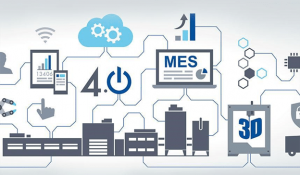
Source: Trackify
After MESA-11 was born, businesses began to digitalize the manual work of 11 MES functions with tools and software systems. Since that, MES systems were born, which are software to help manage, monitor and synchronize at real time the operation of production from input materials, semi-finished products, and output finished products; in addition, it also integrates with ERP to provide the most timely production reports. Automated-MES gradually replaces manual-MES.
Before, the production area was seen as a “black box” in the view of ERP. Production departments manually update reports into ERP at fixed times, or by events. The lack of information synchronization between functions and departments is always a big obstacle when management committee have to make quick decisions (because they have to wait for reports, synthesize reports, etc.). ERP companies also offer ‘production management’ modules, but most of them are for ERP reporting rather than a full MES system.
Meanwhile, SCADA also does somethings like production reports. SCADA gets information from PLCs, providing real-time information, details of machine operation. But its limit is only for one machine or one area or one process in the factory.
MES technology solves this problem quickly because it acts as a common platform that covers all production activities. Therefore, the application of MES is increasingly popular.
4 innovation opportunities with MES
- Speed up reporting and decision making: The quick and efficient processing of report data will help businesses make quick and accurate decisions to respond to customer changes. When businesses move to agile production, having timely, comprehensive information is crucial. MES obviously helps in this case because it can automate production reporting quickly.

- Control the cost of raw materials and labor: Controlling the cost of raw materials here means that the materials are available at the right time to be produced. A lot of labor is wasted in production by waiting for materials. MES provides very good information from the warehouse of raw materials, the current state of the production machine, the current status of the labor, so it will help a lot in controlling these costs.

- Visualize production operations: that is to see the overall of the production processes, what is going on, where, by whom… help production are not interconnected black boxes. This will help production managers quickly identify bottlenecks or better predict upcoming situations.

- Improve quality: Product quality depends on many factors in production on the way from raw materials input to finished products. By analyzing data and information throughout this process, the factory team has the opportunity to find out where it can change to improve quality, reduce material waste, and save costs.

Thanks for reading.

